Ways to Make Money as a Kid: Real Ideas That Build Useful Skills

Kids can make money through safe, age-appropriate local services, selling, teaching skills, or parent-supervised online projects, with the focus on learning useful skills and completing one real job rather than chasing quick income.

I raised three boys. Two of them liked money much more than the third.
That alone is why one giant list of jobs for kids does not work. Their ages, skills, and interest in money can be very, very different.
Over the years, I have written about how kids can make money on Kids Activities Blog. The ideas that work best usually start with one useful thing for one real person.
Kids can make money by doing useful work close to home, selling something, teaching a skill, or building a parent-supervised online project. The best first idea is not the one with the biggest income claim. It is the one the child can complete safely for one real person.
A kid does not need a logo, an LLC, a complicated website, or a dramatic business plan. The first goal is one finished job. Maybe one customer. Definitely one useful lesson.
Start With the Child, Not the Idea
When my son Rhett was 13, he wanted summer jobs so he could make money.
I wanted him to practice reading.
Reading at grade level required real effort for him, and he had never seen reading as something he might do for fun. So I made the Percy Jackson series part of his summer job and negotiated a per-book payment.
He was going to spend the summer asking me for work. I was going to spend the summer asking him to read. This way, we both got what we wanted.
We added a simple routine. Morning and evening reading. No phone or screen time before the morning reading was finished. The book traveled with him. You can read the whole story in My Summer Plan to Entice My Son to Love Reading.
That was not a traditional business. It was a paid project designed around the child in front of me. The right way to make money as a kid depends on age, maturity, transportation, safety, customer contact, and how much of the legal and financial side an adult needs to handle.
Age or stage | Best starting environment | Adult role | Good first directions |
|---|---|---|---|
Younger children, generally under 13 | Home and a trusted family network | Present and managing all customer contact | Extra household projects, organizing, simple yard help, or selling unused items with a parent |
Ages 13–15 | Trusted neighborhood and tightly supervised online work | Vet customers, manage public accounts and payments, and check work-hour rules | Pet care, mother’s helper work, tutoring, crafts, tech help, or a parent-run content project |
Ages 16–17 | Local services, eligible part-time work, and supervised online business | Check state work rules, contracts, accounts, insurance, and payments | Formal jobs, detailed service offers, editing, design, content, or digital products |
Any age | Parent-owned family project | Adult owns the legal and financial side | Family blog, YouTube channel, newsletter, product, or course project |
Federal rules limit the hours and occupations available to many 14- and 15-year-olds, and state rules can be stricter. Work for children under 14 is generally limited to exempt or non-covered activities, including certain casual babysitting and minor chores around private homes.
That is why I like starting close to home. You can see the child work. The customer is known. The project stays small enough to fix.
Path 1: Do Useful Work Close to Home
The word useful matters more than the word business.
Kids Activities Blog grew because it solved specific family problems. It did not need to look impressive first. It needed to help somebody.
A child’s first paid offer works the same way.
Idea | Safe first-customer action | Skill it builds |
|---|---|---|
Extra household project | Write one sentence describing a pantry, garage-shelf, photo-sorting, or patio-furniture project and agree on the price before starting | Estimating and finishing |
Organizing for a relative | Offer a before-and-after plan for one closet, toy shelf, or box of photos | Planning and visible results |
Car washing | Wash one family car, take before-and-after photos, and offer the same simple package to a trusted neighbor | Packaging a service |
Yard or seasonal help | Choose one safe task on one block instead of offering “anything you need” | Reliability and recurring service |
Pet care | Make a care checklist with the owner of a familiar pet | Responsibility and following instructions |
Plant, mail, or package checks | Offer one week of checks to a known family while they travel | Trust and routine |
Mother’s helper work | Help a family the child already knows while the parent remains present | Communication and attention |
Basic tech help | Offer a 30-minute lesson on one familiar task, such as organizing phone photos or using video calling | Teaching and patience |
The adult’s job is to keep the offer inside the child’s actual abilities.
A younger child can wash a car with an adult nearby. An older teen may be able to add vacuuming and interior detailing. Neither needs to use dangerous chemicals or equipment to make the offer sound more official.
The same rule applies to yard work. Raking leaves, watering plants, pulling weeds by hand, sweeping a patio, or rolling bins to the curb can be useful. Roofing, power saws, heavy machinery, and unsafe weather are not starter projects.
A mother’s helper is also different from a babysitter. A helper works while the parent is present. Babysitting places much more responsibility on the child and should match the teen’s maturity, training, and local rules.
Path 2: Teach Something You Already Know
A kid does not have to be the world’s leading expert.
They need to be a few steps ahead of the person they are helping.
A strong math student can practice multiplication with a younger child. A chess player can teach how each piece moves. A teen who draws constantly can lead one beginner lesson that ends with a finished picture.
Teaching idea | First test | Adult role |
|---|---|---|
Tutor a younger student | Offer one short session to a younger family friend using one worksheet or activity | Approve the location, communication, and arrangement |
Teach a hobby | Build one 30-minute lesson with one finished result | Help define the promise and supervise as needed |
Help with reading or homework routines | Read together, review flashcards, or organize assignments | Keep the offer framed as practice help rather than professional educational services |
Homeschooling reinforced this for me over and over: children do better when they can see the finish line.
“Learn to draw” is enormous.
“Draw one cartoon dog in 30 minutes” is a lesson.
The child learns to organize what they know. The customer leaves with something completed. Everyone understands what just happened.
Path 3: Sell Something Without Starting in a Hole
My son Ryan was 16 when he started buying and reselling premium athletic shoes online.
He began with $100 of his own money. When he sold a pair, he reinvested some of the profit into more valuable shoes. He kept doing that for about two years and turned a profit.
I had one rule at the beginning: buy shoes in your own size. If he misread the market and could not sell a pair, at least he could wear them. Once he had earned money he could afford to risk, the business had more room.
This was not the world’s most sophisticated inventory policy. It was a very practical way for a 16-year-old to avoid starting in a hole.
Selling idea | First move | Keep it manageable |
|---|---|---|
Unused toys, books, games, or sports gear | Choose five items, take honest photos, and write clear condition notes | The adult owns the account, handles messages, protects the address, and arranges exchanges |
Family yard sale | Create a price sheet, display, and change box | Start with things already owned rather than buying inventory |
Crafts or art | Show three samples and ask for one preorder | Buy supplies for confirmed demand or a very small batch |
Gift wrapping or party help | Make one sample package or party-prep checklist | Define exactly what is included before accepting the job |
Resale inventory | Start with a small amount the child and parent can afford to tie up or lose | Track purchase price, fees, shipping, sale price, and actual profit |
The simplest pricing formula is:
Price = materials + time + room for mistakes and profit
Revenue and profit are not the same thing.
If a child sells something for $30 after spending $18 on materials and fees, the project did not make $30 in profit. Learning that with a small project is useful. Learning it after buying a closet full of inventory is more painful.
Kids Activities Blog has more ideas for starting small in Kids and Money, including yard sales, pet care, art, cards, and simple family services.
Path 4: Turn a Digital Skill Into a Parent-Supervised Project
The internet makes a kid’s work more visible. It also makes the kid more visible. The adult needs to own the safety, public-account, contract, customer-message, and payment decisions.
Rhett was about 13 or 14 when he started selling custom gaming maps through Fiverr. I could not have built one if my life depended on it, but he understood how to create what customers requested.
The skill belonged to him. The financial account belonged to me. He was too young for his own PayPal account, so I opened one in my name and used it for his payments. I could see the money coming in and going out.
That arrangement was not just convenient. It put an adult where an adult belonged.
Current rules are even clearer. Fiverr permits ages 13–17 to participate only through a parent- or guardian-owned account with direct adult supervision; children under 13 may not use the platform. PayPal’s current U.S. agreement requires an individual account holder to be at least 18, or the age of majority in the state.
Check the policies before creating an account.
Digital direction | What the child can practice | What the adult handles |
|---|---|---|
Video or graphic editing | One defined edit, thumbnail, graphic, or deliverable | Customer approval, messages, files, account, and payment |
Parent-supervised blog or newsletter | Topic ideas, writing, photos, reviews, and useful answers | Privacy, domain, email system, disclosures, contracts, and money |
Parent-supervised YouTube channel | Scripting, filming, editing, thumbnails, titles, and serving an audience | Account settings, privacy, comments, brand messages, and monetization |
Digital guide or mini-course | The skill, instructions, examples, and beginner questions | Selling platform, checkout, delivery, refunds, privacy, and tax records |
Affiliate content | Honest demonstrations, explanations, and relevant recommendations | Website, affiliate agreement, disclosures, account, and payments |
An older child who edits video can begin with footage the family already owns. A child who wants a channel can make three useful videos before anybody starts discussing ad revenue. For an adult-focused look at other models, see these legitimate ways to make money online.
Google AdSense requires an account holder to be at least 18. If a creator is under 18, a parent or guardian can hold the approved account and receive payments.7
A repeatable skill can also become a guide or mini-course. Teach one person first. Write down the questions. Those questions become the outline.
Affiliate marketing can be practiced the same way through a parent-owned project. The child helps create useful content. The adult owns the site, agreement, disclosures, and payment relationship. Adults who want the full model can read How to Start Affiliate Marketing With No Money.
None of this is instant or passive. A digital project may take much longer to produce its first dollar than washing a family car.
It can also teach skills that keep growing.
A Skill Can Grow: Matt Par’s Path From High School to a Digital Business
Matt Par says he began experimenting with YouTube in 2014 as a broke high school student.
He did not begin with a giant team or a million-dollar course. He began by learning what worked on YouTube and repeating it.
His story matters here because it shows stages. It is not a promise that a kid who starts a channel will become a millionaire.
Stage 1: Learn, Publish, and Teach the Process
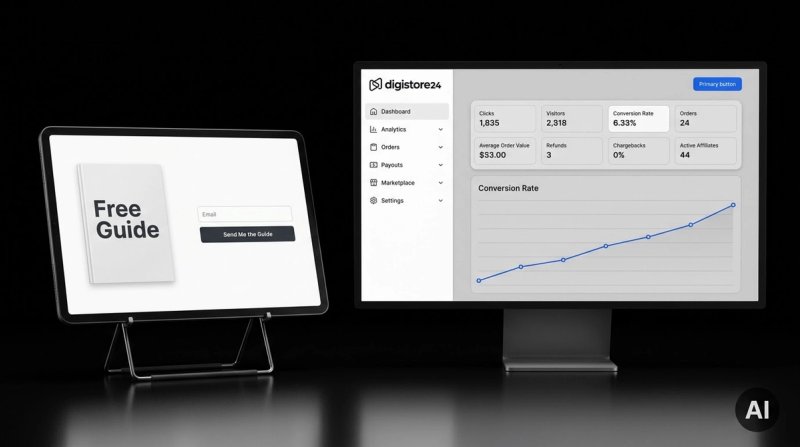
By October 2020, Matt appeared in a Digistore24 tutorial explaining how to select an affiliate offer, create a tracked link, and use YouTube as a traffic source. He also discussed his own course, Tube Mastery and Monetization. Adults who want the full workflow can read our guide to affiliate marketing with YouTube.

Stage 2: Let Other Affiliates Sell the Course
In a November 2022 tutorial, Matt explained both sides of the model: promoting another company’s product as an affiliate and listing his own course so affiliates could promote it.9
The video showed his course at a $1,000 price with a 50% affiliate share at that time. Matt said affiliates were generating tens of thousands of dollars per month in sales for the course.
Those numbers are his statements from 2022. They are not current terms, typical results, or a promise.

Stage 3: Look Back at the Growth
In a November 17, 2022 interview, Matt said he was 22 and had started as a broke high school student in 2014.
A Digistore24 Hall of Fame plaque visible in the interview recognizes more than $1 million in platform sales for Matthew Parson. Matt described himself as a multimillionaire and said Digistore24 helped with backend responsibilities and connected the course with affiliates
At 22, Matt described himself as a multimillionaire, and Digistore24 recognized his course for surpassing $1 million in sales on the platform.
That is sales. It is not the same as profit or personal take-home income.

The useful part of Matt’s story is not the biggest number.
It is the progression: learn, publish, teach, package, and distribute. That happened over years.
Choose One Idea Without Making This Complicated
A child does not need to test all 20 ideas.
Pick the row that sounds most like the child you actually have.
If the child already has… | Start with… | First test |
|---|---|---|
Energy and willingness to help | A local service | Complete one paid job for someone the family knows |
Unused items | A parent-run sale | List or display five items |
A creative hobby | A small product | Show three samples and ask for one preorder |
Strong knowledge in one subject | Tutoring or a lesson | Teach one 30-minute session |
Digital editing or design skill | One defined deliverable | Create one sample for a known person or organization |
A topic they could discuss repeatedly | A parent-supervised content project | Publish three useful pieces before monetizing |
A repeatable process they can teach | A guide or mini-course | Teach one person and record the questions |
- A child who enjoys people may love pet care or lessons.
- A child who wants to work quietly may prefer organizing, editing, crafts, or digital projects.
- A child who is not interested in making money does not need to be turned into a tiny CEO for the family holiday card.
The goal is not entrepreneurship at any cost. The goal is a safe experiment that teaches something useful.
What the Adult Handles
A parent does not need to take over the whole project.
The child should practice the skill, make the sample, help define the offer, and serve the customer. The adult owns the parts where adult judgment and legal responsibility matter.
Child can practice | Adult should own or supervise |
|---|---|
The skill, product, lesson, script, editing, or service | Customer vetting and in-person safety |
The offer description and sample | Public posts, messages, comments, and location privacy |
Recording income and expenses | Contracts, account ownership, payment systems, and refunds |
Learning how the business works | Work-hour rules, permits, insurance, and tax questions |
Serving the customer | Disputes, suspicious requests, and platform compliance |
Federal and state work rules may both apply, and families should follow the stricter applicable standard.
Age does not automatically remove tax responsibilities. The IRS says self-employment tax rules apply regardless of age, and net self-employment earnings of $400 or more generally trigger Schedule SE requirements.
Online privacy deserves extra care too. Federal children’s privacy rules place obligations on covered online services that collect personal information from children under 13.
This is general educational information, not individualized legal, tax, employment, or financial advice.
What to Do With the First Money
Keep this part simple.
I like three categories:
Category | Purpose |
|---|---|
Spend | A small amount the child can enjoy |
Save | Money for a larger personal goal |
Build | Money reserved for supplies, tools, fees, or the next project |
The Build category is where Ryan’s sneaker business grew. He did not treat every sale as spendable money. Some of it bought the next pair.
Tracking costs also teaches the difference between revenue and profit. A notebook or basic spreadsheet is enough.
No child needs a 19-tab financial dashboard.
One Useful Thing for One Real Person
- Pick one useful thing.
- Ask one trusted person.
- Finish the job.
- Then decide whether you want to do it again.
FAQ
Start with parent-supervised projects at home or inside a trusted family network. Extra household projects, organizing, simple yard help, a family yard sale, crafts, or plant and pet checks can work. The adult manages all customer contact and payment.
A 12-year-old may add mother’s helper work, tutoring younger children, pet care, hobby lessons, or simple creative projects. The right choice depends on maturity and local rules, and a parent should manage outside customers and online accounts.
A 13-year-old can practice content, editing, design, or online selling through a parent-owned and supervised account when the platform allows it. The adult handles public communication, contracts, payments, privacy, and policy compliance.
Selling an unused item with a parent or completing a paid project for someone the family already knows may be faster than building an audience. Speed is never guaranteed.
A child can participate in a family business or small project, but contracts, permits, work rules, platform terms, taxes, and account ownership vary. A parent should check the current federal, state, local, and platform requirements.
They can. Age does not automatically remove tax obligations. The IRS says self-employment tax generally applies when net self-employment earnings reach $400, regardless of age.3
A child can create with active parental involvement. Google AdSense requires the account holder to be at least 18, so a parent or guardian must hold the approved account and receive payments for an under-18 creator.7
A minor can learn affiliate marketing and help create useful content. An eligible adult should own or manage the website, affiliate agreement, disclosures, account, and payments. The current terms of each program control.